(BPT) - Power outages have always been part of life, but today they are lasting longer, happening more frequently and hitting harder in places that once saw little extreme weather.
Severe storms are also knocking out local infrastructure for days or even weeks, exposing the limits of an aging electric grid. At the same time, rising electricity demand from data centers is adding strain, creating a system in which outages are becoming harder to predict and slower to resolve.
Electric customers can't control storms or aging equipment, but they can control how exposed their household is when the power grid fails.
Backup power is evolving
For a long time, backup power meant a clunky gas generator and a plan to keep only a few essentials running. That image doesn't match homes today, where critical electrical needs spread across the entire house and its devices. Whole-home backup batteries are emerging as a more resilient approach, designed to power the home as a whole and manage it intelligently.
This shift extends beyond emergencies to bring greater control and clearer insight into energy use. A 2025 research study found that 60% of U.S. households are interested in tools like smart appliances and energy-efficient products to monitor and reduce energy use. Electricity prices have climbed, and homeowners want visibility into where power is going and how to lower the bill. Whole-home backup, especially when paired with solar and smart controls, can provide those insights.
A new kind of smart whole-home backup
Instead of outdoor generators and a tangle of extension cords, more homeowners are turning to battery-based systems that can keep their entire home running and, in some cases, work alongside rooftop solar.
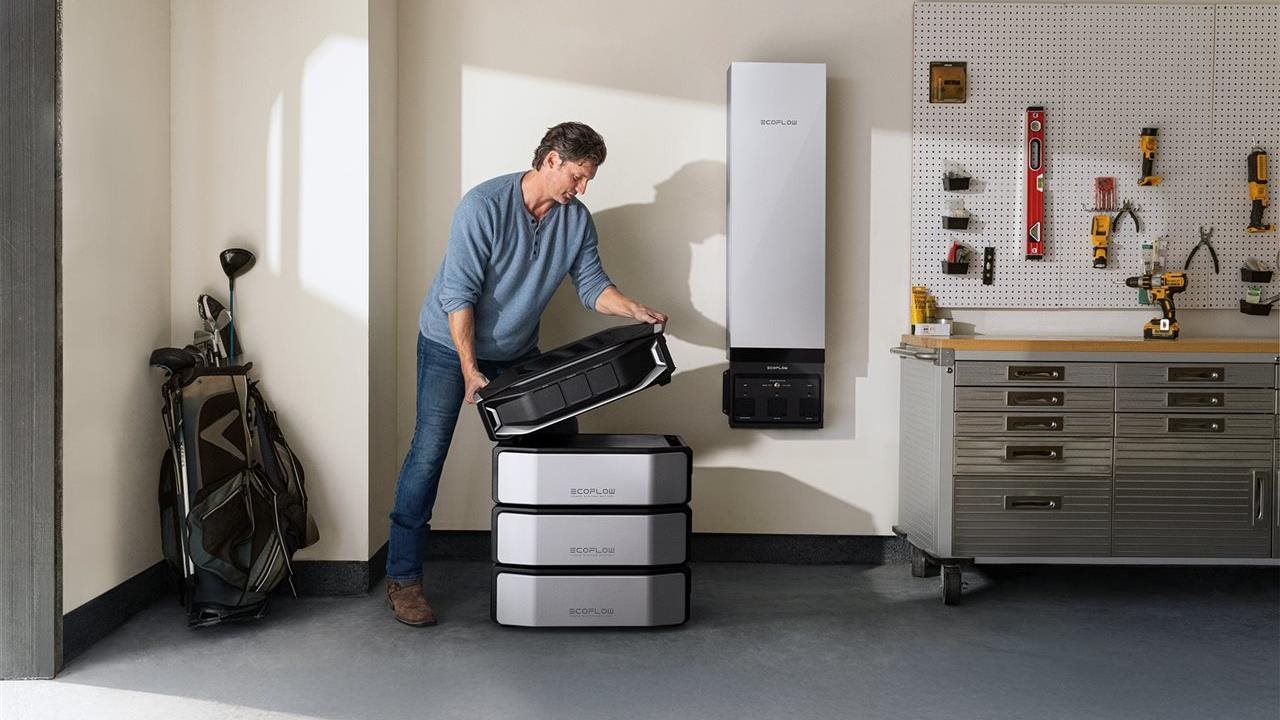
EcoFlow is one of the companies responding to that reality. Its DELTA Pro Ultra X is an easy-to-install, whole-home backup power station that can work alongside solar, battery storage and generators, offering homeowners a powerful alternative when the grid goes down. With a capacity that scales to days of backup power, the system is built to support extended outages rather than short interruptions. When paired with EcoFlow's Smart Home Panel 3, it can switch over from grid power in a matter of milliseconds, and automatically adjust how energy is sourced and used as conditions change.
The real upgrade is control at the device level
EcoFlow is addressing another familiar smart-home problem: nothing "talks" to anything else. Many battery systems still manage outages at the circuit level, which can force unwanted tradeoffs when every watt matters. For example, if a kitchen circuit includes both a main refrigerator and a wine fridge, you may want the main refrigerator running and the wine fridge shut down. However, circuit-only control can't make that distinction.
"We're entering a new era of home energy, one where independence depends on systems and devices working together, not in silos," said Jenny Zhang, President of EcoFlow's Residential Business. "Our goal is to lay the interoperable foundation homeowners need to manage energy intelligently, adapt in real time and stay resilient no matter the state of the grid."
EcoFlow is leaning into this need for granularity with its Smart Home Energy Management System, which coordinates solar generation, home batteries, household circuits and compatible devices onto a single platform. The point is practical control in an emergency, with clearer visibility into where power is going and more flexibility to decide what stays online as conditions change.
To expand that device-level compatibility, EcoFlow and more than 15 other brands have formed the EcoFlow Ecosystem Alliance, an effort to make energy and smart-home gear more interoperable. Homey, part of LG Electronics, recently reached an agreement with EcoFlow to deepen integration between Homey's Energy Dongle and EcoFlow's Smart Home Energy Management System.
Preparedness should not feel extreme
Whole-home backup is becoming a practical answer to a simple question: What happens when the grid can't deliver? For some homeowners, the case is obvious; for everyone else, the combination of aging infrastructure, growing demand and unpredictable disruptions is making the question worth asking before the next outage.
To learn more about EcoFlow's whole-home backup solutions and the Ecosystem Alliance, visit EcoFlow.com.