DISA Uranium Hosts Government, Tribal and Industry Leaders at its First NRC-Licensed AUM Cleanup Project in Colorado
PR Newswire
CASPER, Wyo., Nov. 4, 2026
Mary Ann project demonstrates the potential to address legacy Abandoned Uranium Mine (AUM) waste using HPSA® technology while supporting domestic uranium supply
CASPER, Wyo., Nov. 4, 2026 /PRNewswire/ -- DISA Uranium Corporation ("DISA Uranium" or the "Company") welcomed government, Tribal and industry leaders last week to its first Abandoned Uranium Mine ("AUM") remediation project under its U.S. Nuclear Regulatory Commission ("NRC") license at the Mary Ann site in Montrose County, Colorado. DISA Uranium is pioneering a new model for AUM remediation and recycling, utilizing its patented HPSA technology to treat legacy uranium mine waste on-site.
On October 29, 2026, visitors traveled to the AUM site located outside of Nucla for a firsthand look at the project. Participants included representatives from the Navajo Nation; Pueblo of Laguna; Colorado Division of Reclamation, Mining and Safety; Colorado Department of Public Health and Environment; Bureau of Land Management (BLM); Montrose County Commission in Colorado; San Juan County Commission in Utah; Grand Junction Economic Partnership; Colorado Mining Association; Generation Atomic; Club 20; along with staff from the U.S. Senate and U.S. House of Representatives as well as industry partners.
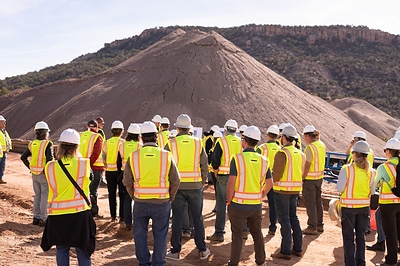
Mary Ann is the first cleanup project conducted under DISA Uranium's NRC Service Provider License. Issued in September 2025, the license is the first and only of its kind and authorizes DISA Uranium to deploy its mobile HPSA technology directly at AUM sites.
The project brings together two national priorities: addressing legacy uranium mine waste and supporting America's domestic nuclear fuel supply. Located on BLM land, Mary Ann establishes a regulatory pathway, developed in coordination with the NRC, BLM and the State of Colorado, for recovering uranium from legacy mine waste on federal land. It's a step toward remediation at scale across the West.
Greyson Buckingham, Chief Executive Officer of DISA Uranium, commented, "Mary Ann is a significant milestone for DISA Uranium. As our first cleanup project under our NRC Service Provider License, it represents an important step in bringing HPSA into the field to address the legacy of uranium mining. It also demonstrates the potential to recover uranium from material that has historically been left behind, helping strengthen America's domestic nuclear fuel supply. We were pleased to welcome representatives to the site to see this work and discuss how we can apply this approach more broadly across the American West, addressing longstanding cleanup needs while helping reduce America's reliance on foreign uranium."
HPSA uses a water-based mechanical process to separate uranium-bearing fines from waste rock. Cleaned coarse material is returned to the site for restoration, while the concentrated uranium-bearing material is prepared for removal and subsequent recovery. This approach offers a potential source of domestic uranium from material otherwise left as an environmental liability.
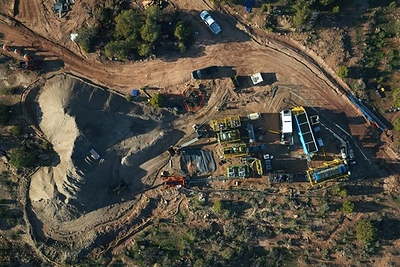
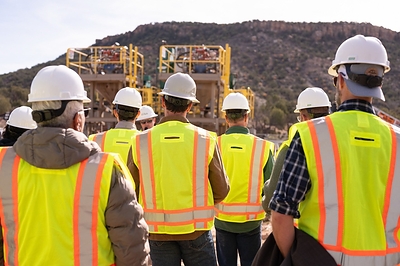
The visit gave participants a firsthand view of HPSA treatment, concentrate preparation and the return of cleaned coarse material to the site. The tour also provided an opportunity to discuss the technology's potential application at other AUM sites across the American West.
Navajo Nation EPA Executive Director Stephen B. Etsitty said "The Navajo Nation EPA is statutorily required to evaluate treatment technologies and resource recovery technologies and develop permanent remedies to clean up the abandoned uranium mines on our lands. Our responsibility to protect our sacred land requires careful and independent review of all remediation options. That is why we have taken a measured approach to assessing HPSA technology, beginning with the 2022 USEPA-funded treatability study. Visiting the Mary Ann Project site and seeing the improved HPSA equipment in operation increases our understanding and helps us prepare for the commercial field-scale verification study funded by the Navajo Nation. Our Phase 2 Verification study is approved by USEPA and will be fully implemented in Spring 2027. It is an important next step in our process to remediate radioactive sand and rock in a manner that permanently protects our land, water and people from radioactive hazards. Our approach does not follow the current USEPA approach which passes legacy waste problems from one generation to another. Our cleanup will be guided by 4 N.N.C. § 2305 which identifies our own remediation requirements and preferences and provides permanent solutions for our communities due to the requirement to treat and then remove any remaining danger. HPSA is a positive step toward a future that does not include leaving hundreds of disposal repositories and untreated radioactive waste near our communities and in our watersheds."
Dr. Richard Luarkie, of Emerging Equities Solutions Group, advisor at the Native American Mining and Energy Sovereignty Initiative at the Colorado School of Mines' Payne Institute, and former two-term Governor of the Pueblo of Laguna, said, "For Tribal communities, including my own tribe, the legacy of uranium mining isn't history. It is part of the land our people live with every day. As new approaches to Abandoned Uranium Mine (AUM) waste are tested in the field, Tribal nations must have a real voice in shaping them. With sound science and technology, genuine community engagement and tribal consultation, and partners in industry and government committed to doing this hard work responsibly, a longstanding liability can become an opportunity. Together, we can move from an economy that only extracted to one that also restores, and from the harms of the past toward healing the land that raised us."
AUM Portfolio Advancement
Beyond Mary Ann, DISA Uranium continues to expand its portfolio of AUM remediation and recovery opportunities across the American West, with agreements covering more than 375 legacy AUM sites primarily across Colorado and Utah. These agreements provide DISA Uranium with a substantial pipeline of potential uranium-bearing material that can be remediated and recovered using its mobile HPSA technology. Mary Ann represents the first step toward demonstrating a repeatable remediation and recovery model that can be deployed across this growing portfolio, creating a pathway to recover domestic uranium resources while restoring historic mine sites to productive use.
About DISA Uranium
DISA Uranium Corporation (DISA Uranium) is redefining American uranium recovery and production. Headquartered in Casper, Wyoming, the veteran-led Company recovers uranium and vanadium from abandoned uranium mine (AUM) waste, remediates legacy sites left across the western United States, and applies its patented HPSA® technology to make conventional uranium production cleaner, more efficient, and more economic. DISA Uranium holds the only U.S. Nuclear Regulatory Commission (NRC) license to treat and recover AUM waste across multiple sites — and with a growing conventional resource base behind it, the Company is building the domestic capacity to turn American waste and American ore into American fuel. Our mission is simple: restore the past while powering the future and rebuild a secure domestic uranium supply chain.

 View original content to download multimedia:https://www.prnewswire.com/news-releases/disa-uranium-hosts-government-tribal-and-industry-leaders-at-its-first-nrc-licensed-aum-cleanup-project-in-colorado-302928670.html
SOURCE DISA Uranium(TM) Corporation

